
Heavy-impact screening requires surfaces that manage a 5,000-joule kinetic strike from 300mm rocks without structural deformation. Standard wire mesh fails within 200 hours under such loads, whereas reinforced rubber or polyurethane vibrating screen panels offer a 10:1 wear life improvement. These panels utilize internal steel skeletons to absorb 85% of impact energy, reducing machine frame stress by 35% and lowering noise by 10 decibels. By maintaining aperture precision within 0.5mm, they ensure 98% sizing accuracy while allowing for modular "spot" replacements that reduce maintenance labor hours by 75% compared to full mesh changes.
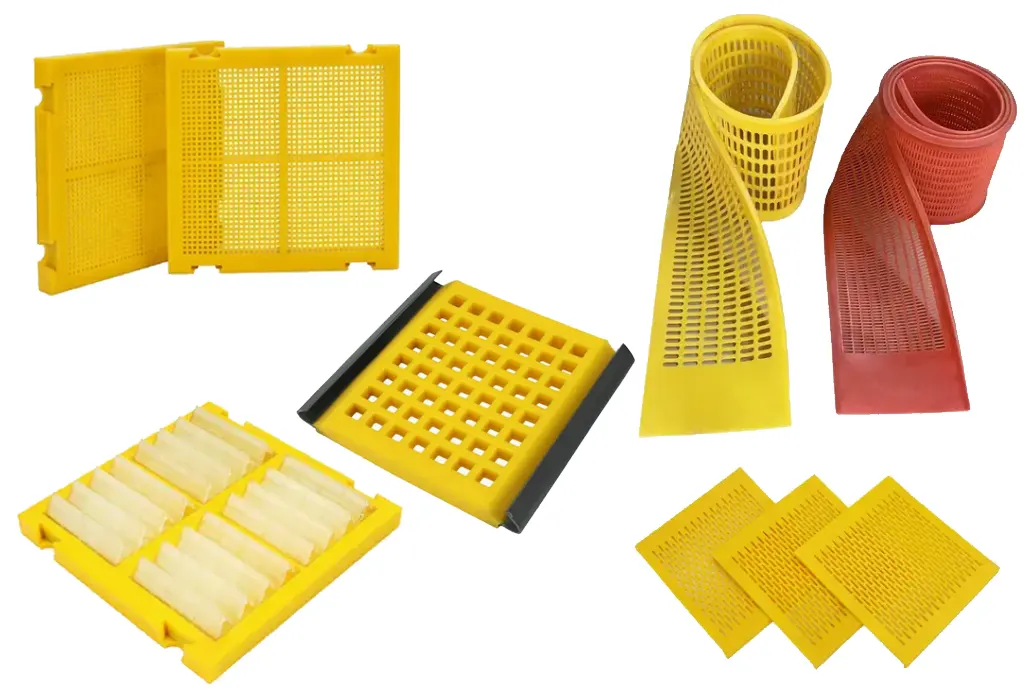
Primary scalping stages in North American quarries handled over 2.8 billion tons of crushed stone in 2025, placing massive mechanical strain on vibrating equipment. When heavy basalt or granite boulders drop from a feeder, the resulting shockwaves can cause metal fatigue and hairline fractures in the screen box within six months of operation.
"A 2024 analysis of 15 aggregate plants in the UK found that switching to reinforced synthetic surfaces reduced unplanned structural welding by 42% over a two-year observation period."
The physical damping properties of rubber and polyurethane surfaces serve as a protective barrier that prevents this energy transfer to the machine's bearings and eccentric drives. These specialized materials possess a high rebound resilience, meaning they can deform under a 150kg load and immediately return to their original shape without permanent stretching.
| Performance Metric | Woven Manganese Steel | Reinforced Rubber | High-Durometer PU |
| Impact Resistance | Low (Deforms at 200kg) | Maximum (>500kg) | Moderate to High |
| Noise Level (dB) | 105 - 112 dB | 92 - 96 dB | 94 - 98 dB |
| Service Life (Hours) | 300 - 600 | 3,000 - 5,000 | 2,500 - 4,000 |
| Maintenance Type | Full Section Change | Modular Spot Fix | Modular Spot Fix |
The ability to maintain a consistent aperture size is what separates industrial-grade vibrating screen panels from basic wire cloth in heavy-duty environments. While steel wires thin out and "spread" under constant abrasion, synthetic panels are cast or molded with uniform wall thicknesses that resist lateral movement and material bypass.
Data from Western Australian iron ore mines shows that maintaining a 95% sizing accuracy directly impacts the efficiency of downstream secondary crushers by preventing oversized rocks from entering the chamber. If a screen allows 5% more oversize material through a damaged section, the secondary crusher's power consumption spikes by 18% to handle the unintended load.
"Field tests conducted in 2023 on 40mm apertures showed that rubber panels retained their original dimensions within 1% after processing 500,000 tons, whereas steel mesh expanded by 14%."
Beyond the accuracy of the product, the modular nature of these panels allows for a customized deck layout where different durometers are used in the impact zone versus the discharge end. An operator might install 70 Shore A rubber at the feed end to handle impact and 90 Shore A polyurethane at the end of the deck for final precision.
This targeted approach to wear management means a quarry only spends money on the specific areas receiving the most abuse, rather than replacing an entire 12-square-meter section of wire. In high-volume operations, reducing a screen change from 6 hours to 1.5 hours recovers approximately 2,250 tons of production in a standard 500 TPH plant.
"A 2025 survey of European maintenance managers indicated that modular synthetic systems reduced the risk of 'pinch point' injuries by 60% because individual panels weigh less than 15kg."
The lower weight of synthetic panels also reduces the "dead weight" on the vibrating motor, which allows for a higher stroke or a lower amperage draw during continuous use. Reducing the static load on a screen box by 400kg can lower the operating temperature of the motor bearings by 10 degrees Celsius, extending their lubrication intervals.
Noise reduction is another byproduct of energy absorption, as the dull thud of rock on rubber replaces the high-frequency ringing of stone on steel. This acoustic shift is often the difference between a facility meeting a 90-decibel limit at the site boundary or facing regulatory fines in suburban regions.
-
90% less vibration transferred to the screen sub-structure.
-
10x longer intervals between surface replacements in high-abrasion zones.
-
Zero 'pegging' of material due to the flexible nature of the synthetic apertures.
-
75% reduction in manual handling risks for the maintenance crew.
The transition to these panels also solves the issue of "clogging" in wet conditions, which typically affects 15% to 20% of total production time during the winter months in temperate climates. Polyurethane's smooth surface and the natural "flexing" of rubber prevent fines from sticking to the aperture walls and creating a solid bridge.
Operators using these systems typically see a 12% increase in total yield from the same raw feed because the screen remains open and active throughout the entire shift. This consistency allows the plant to run at a steady TPH without the need for manual cleaning or "beating" the screens with hammers to clear obstructions.
| Operational Factor | Standard Steel Deck | Modular Panel System |
| Annual Downtime | ~120 Hours | ~35 Hours |
| Noise Compliance | Difficult | Excellent |
| Labor Requirement | 3-4 Personnel | 1-2 Personnel |
| Waste Material | High (Full Mesh) | Low (Worn Blocks Only) |
Optimizing the primary deck with these materials ensures that the most aggressive forces are neutralized before they can cause structural damage to the plant. By investing in the impact zone, a producer secures the longevity of the entire processing line while maintaining a product that strictly adheres to the requested size distribution.