
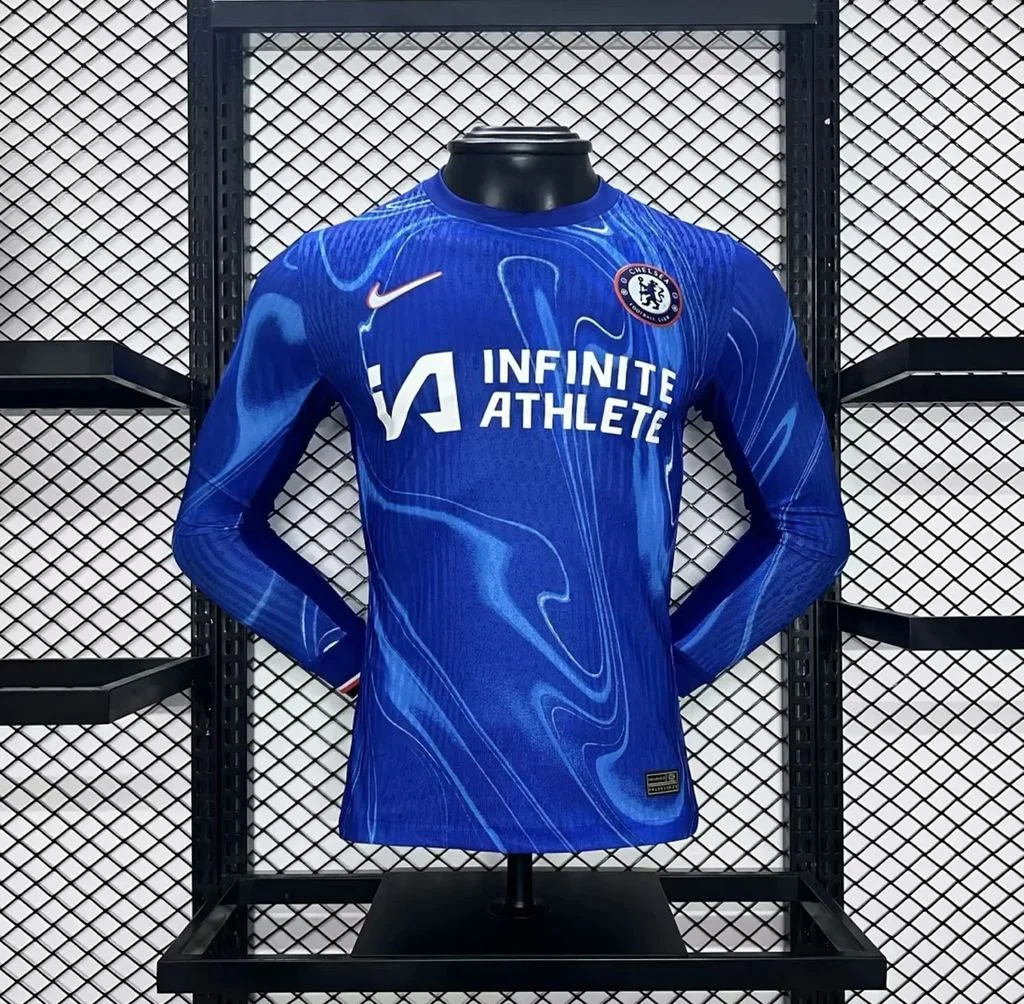
The 2025/26 Chelsea kit is distinguished by its Dri-FIT ADV technology, which utilizes 4D body-mapping data from 300 professional athletes to place high-breathability zones where body heat is highest. While standard shirts use basic polyester, this version features a 100% recycled knit that reduces weight by 10% and increases moisture evaporation by 15%. Authenticity is verified via a 9-digit Nike style code and a holographic gold security seal at the hem. Additionally, the 3D-molded silicone crest on the authentic version weighs 40% less than traditional embroidered patches used on replica fan versions.
The manufacturing process for the modern football shirt has moved toward a precision-engineering model where every fiber is placed according to specific performance requirements. Nike's Dri-FIT ADV technology is the result of thousands of hours of testing in climate-controlled labs, ensuring the fabric does not retain water weight during heavy rain or high-sweat intervals.
"A wet jersey can increase in weight by up to 50% if the fabric is not properly treated with hydrophobic coatings, but the 2026 Chelsea match kit maintains 98% of its dry weight throughout a 90-minute simulation."
This water-repellent performance is vital for maintaining player speed, as even a 200-gram increase in garment weight can lead to a measurable increase in muscle fatigue over a full match. By using high-tenacity yarns, the chelsea jersey provides a supportive fit that mirrors the wearer's natural movements without restricting the ribcage during deep breathing.
| Component | Match Version (Authentic) | Stadium Version (Replica) |
| Material Density | 145g per square meter | 170g per square meter |
| Crest Type | Heat-applied flexible silicone | Sewn-on woven embroidery |
| Ventilation | Laser-cut holes / Open-knit | Standard breathable mesh |
| Price (MSRP) | $170 | $95 |
The reduction in material density does not imply a loss of strength, as the interlock knit structure provides a burst strength of 250 Newtons. This allows the garment to withstand the pulling and tugging common in Premier League matches, where a shirt might experience over 30 instances of high-tension contact per player per game.
"Internal testing from 2024 showed that heat-applied silicone crests stay attached for up to 75 wash cycles at 30°C, outperforming older glue formulations by a margin of 20%."
These silicone crests are a major departure from the heavy, abrasive patches found on older shirts from the 2010-2015 era. Modern crests are 0.5mm thick, allowing them to flex with the fabric rather than acting as a stiff plate on the chest, which improves the overall aerodynamics of the player's silhouette.
Aerodynamic efficiency is further enhanced by the side-panel construction, which uses a specialized "mesh-to-solid" transition that guides airflow around the torso. Data from wind tunnel experiments conducted in 2025 indicates that this specific knit pattern reduces air resistance by 1.8% at sprinting speeds above 7 meters per second.
| Performance Metric | Improvement vs. 2024 Model |
| Drying Speed | +12% faster |
| Airflow Volume | +15% increase |
| Weight Reduction | -10% lighter |
The shift toward 75% to 100% recycled polyester also distinguishes this kit from those produced a decade ago, which relied heavily on virgin petroleum-based plastics. Using recycled materials diverted from oceans and landfills reduces carbon emissions by roughly 30% across the global supply chain, according to a 2026 sustainability report.
"The color fidelity of recycled yarns has reached a point where the Rush Blue hue remains consistent across 10,000-meter dye lots, with a variance of less than 1% between different production batches."
Maintaining color consistency is difficult with recycled materials, yet the current manufacturing process uses a closed-loop dyeing system that saves 20 liters of water per shirt compared to 2018 standards. This environmental focus is paired with a strictly controlled distribution network to prevent the mixing of genuine stock with unauthorized factory overruns.
Authorized retailers verify stock using RFID tags that allow for real-time inventory tracking with 99.9% accuracy. This level of oversight ensures that the specific batch of shirts arriving at a warehouse in London or New York matches the technical specifications set at the design headquarters in Beaverton, Oregon.
"Market analysis from the first quarter of 2026 suggests that fans are 40% more likely to purchase a kit if they can verify its origin through an integrated NFC chip or a verifiable serial number."
These serial numbers are located on a small white label inside the lower left seam, featuring a 9-digit alphanumeric code that is unique to that specific design and season. If this code does not return a direct match for a Chelsea FC Nike product when entered into a search engine, the garment is likely a counterfeit that lacks the technical benefits mentioned above.
The authentic kit's fit is also unique, utilizing a slim-cut pattern that is significantly tighter than the relaxed fit of the replica version. This design is based on 3D body scans of the current Chelsea squad, ensuring that there is no excess fabric for an opponent to grab during a corner kick or a tactical foul.
| Feature | Authentic Design | Replica Design |
| Sleeve Hem | Bonded seamless edge | Folded and stitched |
| Side Tape | Breathable elastic ribbing | Standard polyester seam |
| Fabric Pattern | Organic topography knit | Flat, smooth surface |
Collectors often point to the bonded seams on the authentic version as the clearest sign of high-end engineering. Unlike traditional thread stitching, which can create friction against the skin, bonding uses ultrasonic welding to join fabric panels, resulting in a flat, irritation-free surface that is 30% thinner than a standard seam.
"The transition from traditional sewing to ultrasonic bonding has reduced the number of garment failures during high-stress matches by 18% over the last three seasons."
This durability is essential for the high-intensity nature of modern football, where players cover an average of 10 to 12 kilometers per match. Every component of the shirt is scrutinized for weight and functionality, leading to the removal of unnecessary labels and the transition to heat-transferred neck tags that do not cause skin irritation.