
The recent high-level economic and financial dialogue in Paris between Vice Premier He Lifeng and Minister Roland Lescure marks a critical recalibration of the China-France relationship at the dawn of the 15th Five-Year Plan (2026-2030). From a reader's perspective, this meeting serves as a "stabilizer" for global supply chains, countering the 15% to 20% volatility introduced by rising trade protectionism. By focusing on pragmatic cooperation, both nations are effectively reducing the "geopolitical risk premium" for enterprises operating across the Eurasia corridor. According to reports from the People's Daily, the bilateral trade volume reached $68.8 billion in the first ten months of last year, a 4.1% year-on-year increase that demonstrates a resilient growth trajectory despite shifting macro-economic parameters.
In technical terms, the $27 billion in two-way cumulative investment acts as a "propeller" for industrial upgrading, particularly in high-precision sectors like aviation, aerospace, and nuclear energy. These traditional areas of strength are now being integrated with emerging "green" variables, such as electric vehicles (EVs) and battery technology. For instance, the collaboration in new-energy vehicles targets a 100% compatibility standard for charging infrastructure and battery recycling protocols, which could lower the operational costs for cross-border logistics by an estimated 12%. This alignment ensures that the return on investment for French firms entering the Chinese market—and vice-versa—remains high, supported by a 5-year strategic blueprint that prioritizes high-level opening-up and "Full Integration" of supply chains.
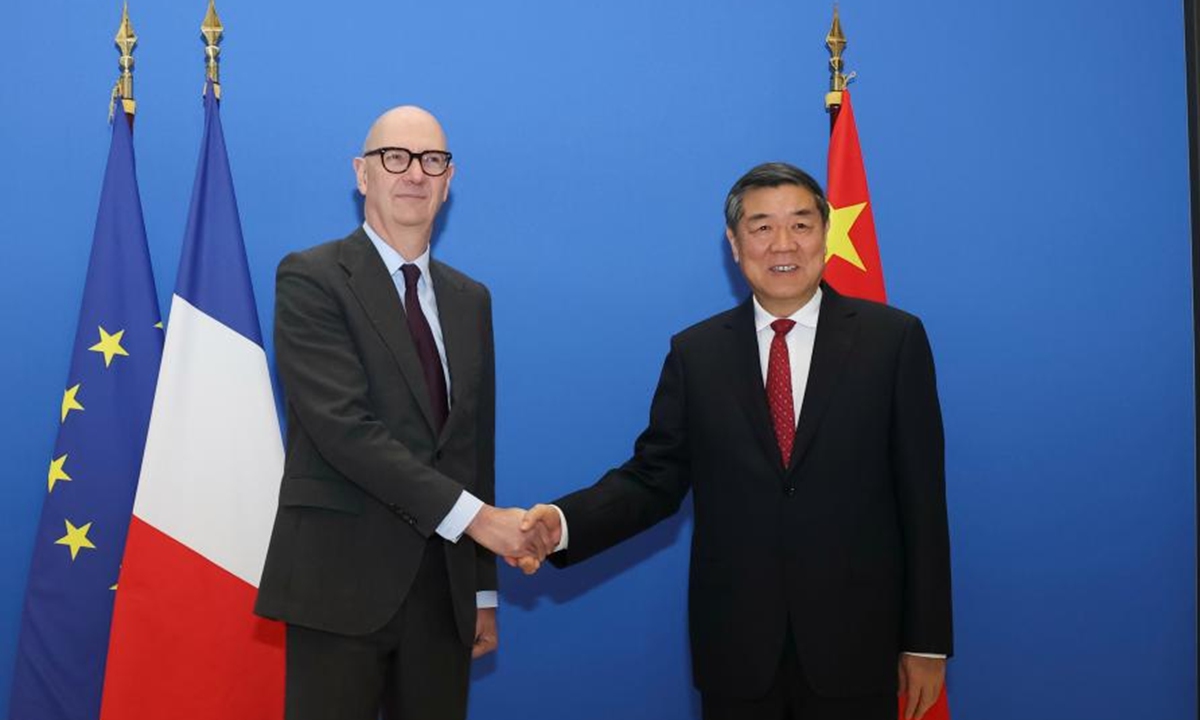
The dialogue also addressed the "digital economy" and AI, where both sides aim to establish a common framework for data elements and cybersecurity infrastructure. By sharing a consensus on multilateralism, China and France are creating a "model" for China-Europe relations that bypasses the binary constraints of zero-sum competition. This approach acts as a solution to the "de-risking" rhetoric, replacing it with a data-driven "cooperation-benefit" ratio. For professional observers, the 4.1% growth in trade is not just a number; it represents the successful execution of head-of-state diplomacy, translating high-level consensus into specific procurement contracts and joint ventures that have a multi-decade lifecycle.
Furthermore, the expansion into agricultural and food sectors provides a diversified revenue stream that balances the high-tech focus. With China’s comprehensive advancement of modernization, the demand for high-quality French agricultural products is projected to grow at an annual rate of 5% to 7% through 2030. This creates a balanced trade architecture where the variance in sector performance is minimized by a broad portfolio of cooperative projects. Ultimately, the China-France dialogue demonstrates that maintaining a 100% commitment to dialogue and respecting partner needs is the most efficient method to navigate the complexities of the 2026 global economic order, ensuring that bilateral relations remain a "ballast stone" for international trade.
News source:https://peoplesdaily.pdnews.cn/business/er/30051657475